
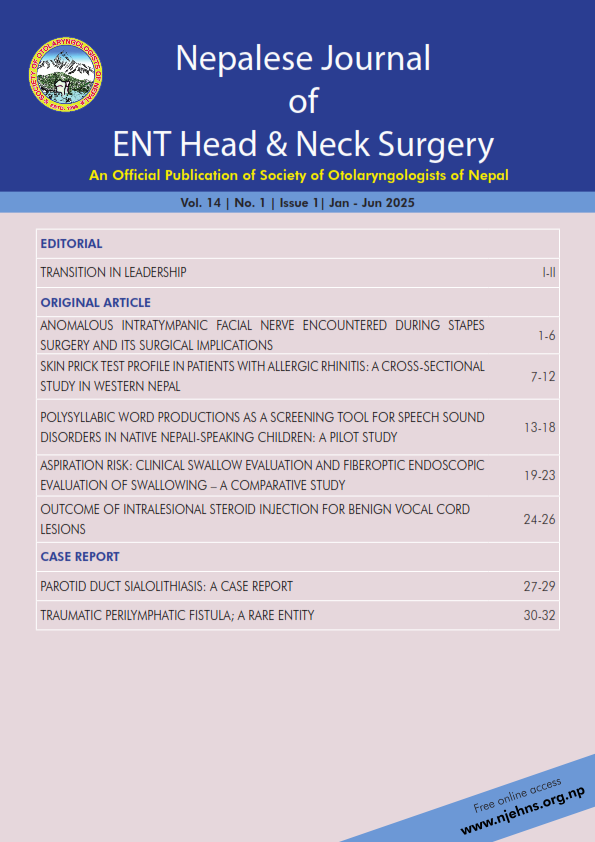
Anomalous Intratympanic Facial Nerve Encountered During Stapes Surgery and Its Surgical Implications
Abstract
Aims and Objectives: Identifying the facial nerve in any middle ear surgery is of utmost importance. This study aimed to find the frequency of intratympanic facial nerve anomalies encountered during stapes surgery and note any modifications made in the surgical procedure.
Methods: The study was conducted in the department of ENT-Head and Neck Surgery in a tertiary referral hospital in Nepal. A retrospective review of medical records of stapes surgery performed between January 2020 and December 2024 was conducted.
Results: A total of 121 stapes surgeries were performed in 121 patients (51 males and 70 females). The age ranged from 18 to 65 (mean 34.7 ± 9.2) years. Anomalous facial nerves were found in 10 (8.3%) cases. Partial prolapse of intact fallopian canal and dehiscent facial nerve without prolapse were observed in four (3.3%) cases each. Total prolapse of the facial nerve over the stapes footplate was noted in two (1.6%) cases. Almost all patients underwent standard stapes surgery. However, in the two cases with total prolapse, fenestration was created in the promontory in one, while the procedure had to be abandoned in the other. The facial nerve function was normal post-operatively in all the cases.
Conclusion: Anomalous intratympanic facial nerves encountered during stapes surgeries are not uncommon. Being vigilant about the possibilities of anomalous facial nerve and tailoring the surgical technique accordingly is crucial for ensuring a safe and successful outcome.
Keywords: Facial nerve, stapes surgery, Stapes
Downloads
Published
How to Cite
Issue
Section
License
Copyright (c) 2026 Nepalese Journal of ENT Head & Neck Surgery

This work is licensed under a Creative Commons Attribution-NonCommercial 4.0 International License.